

Housing Supply Ireland 2026: Are We Finally Building Enough Homes?
-
by Colene Faulkner
- September 16, 2026
- Uncategorized
- 0
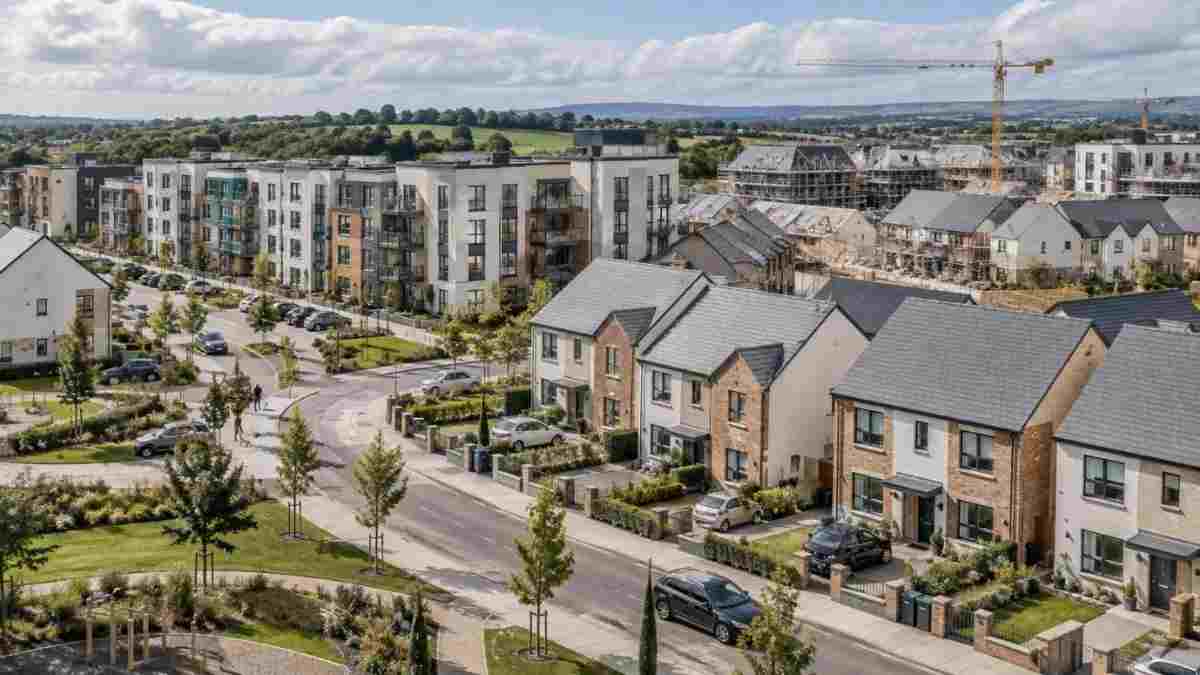
For years, almost every conversation about the Irish property market has eventually arrived at the same place: we simply don’t have enough homes.
That shortage has helped sustain house prices, kept rental availability painfully tight and encouraged buyers to widen their searches from Dublin into established commuter towns such as Naas. It also explains why apparently contradictory things can happen at once — affordability can deteriorate while demand for property remains remarkably resilient.
The latest construction figures are worth paying attention to. Figures released by the Central Statistics Office on 17 September show that planning permission was granted for 11,912 homes during the second quarter of 2026, an increase of 60% compared with the same period last year and the highest quarterly figure since Q4 2021. Of those homes, 6,275 were houses and 5,637 were apartments.
That’s encouraging. But anyone who works in property knows there is a considerable distance between a planning permission and a family turning a key in the front door.
And that distance is where the Irish housing story becomes more complicated.
Is Ireland Building More Homes in 2026?
Ireland’s housing pipeline strengthened in Q2 2026, with planning permission granted for 11,912 homes, up 60% year on year. Actual new dwelling completions moved in the opposite direction, with 8,823 homes completed during the quarter, 3.6% fewer than a year earlier.
Planning approvals tell us something about what could be built. Completions tell us what has actually made it through construction and into the housing stock.
There were some encouraging details beneath the completion figures. Scheme housing — houses built as part of multi-unit developments — increased by 2% to 4,738 homes. Apartment completions fell considerably more sharply, down 12.2% to 2,658.
For people trying to buy or rent a home, completions are ultimately the figure that matters most. A permission may improve the future pipeline, but it does nothing for the family attending three viewings this Saturday.
Why Do Planning Permissions Matter If the Homes Aren’t Built Yet?
Planning permissions show what may come through later, while completions tell us what has actually been built. Not every approved development proceeds immediately, with finance, construction costs, infrastructure and the viability of individual projects all having a bearing on what happens next.
The latest numbers are substantial. Apartment approvals rose by 107% compared with Q2 2025, while house approvals increased by 33%. Across Dublin’s four local authorities, the number of homes approved rose by 78.5% to 3,241.
There is a note of caution in the CSO figures. Planning numbers can move sharply when one or several large developments receive permission, so a particularly strong quarter shouldn’t automatically be read as a long-term trend. The processing of Strategic Housing Development applications can also affect quarterly comparisons.
Still, after years of talking about the need for more housing in the pipeline, significantly more homes receiving permission is welcome. The question now is how many make it onto building sites and eventually into the hands of buyers and renters.
What Is Happening to New Homes in Dublin?
Dublin accounted for 36% of new dwelling completions in Q2 2026, but the total number completed in the region fell by 16.4% compared with Q2 2025. At the same time, planning approvals across Dublin increased sharply, leaving a mixed picture between what is being built now and what could come through later.
This is particularly important in a city where several different groups are chasing limited housing. Families need suitable houses, first-time buyers need properties that work within their mortgage approval, and renters need enough apartments and houses to have some genuine choice.
Apartments are a major part of that picture. Of the 2,658 apartments completed nationally during Q2, 2,006 were in Dublin. In Dublin City itself, apartments accounted for 91.4% of all new dwelling completions.
So a 12.2% national decline in apartment completions isn’t an abstract construction statistic. Apartments account for a significant part of Dublin’s housing needs, particularly for renters, first-time buyers and smaller households.
Why Does the Construction Picture Look Different Around Naas and Kildare?
Kildare sits within the Mid-East region, where new dwelling completions increased by 9.4% year on year in Q2 2026. The region also recorded 1,301 scheme-house completions, the highest number of any Irish region during the quarter.
Locally, that is significant for Naas and the wider Kildare market. The Dublin commuter belt has changed substantially over the past decade, and Naas is no longer simply somewhere buyers look when Dublin becomes too expensive.
Schools, employment, amenities and transport connections all contribute to established demand in their own right. Buyers frequently arrive with Naas already firmly on their shortlist.
New construction is particularly relevant because scheme-built houses are closely aligned with the type of property many buyers in the area want: modern family homes within established or expanding residential developments.
It also provides some context for the price figures discussed in our previous market update. Kildare’s median residential purchase price reached €449,999 in the 12 months to June 2026, compared with €500,000 in Dublin. Supply is coming through in parts of the commuter belt, but demand remains strong.
Will More Construction Bring House Prices Down?
More housing supply can reduce pressure on the property market over time, but planning approvals alone are unlikely to produce an immediate fall in Irish house prices. Homes have to be financed, constructed and completed before buyers actually have more choice.
This is where expectations need to be kept sensible.
A buyer reading that permissions have jumped by 60% could reasonably wonder whether waiting a year might mean substantially more homes and lower prices. Housing delivery doesn’t move that quickly or evenly, and an approved development doesn’t provide a reliable timetable for when individual homes will reach the market.
Location matters too. Building 500 homes where demand is moderate is not equivalent to delivering 500 suitable homes in an area where buyers are competing heavily. Two neighbouring areas can behave quite differently because one has several developments under construction while the other has almost no new stock coming through.
Buyers don’t purchase the national housing supply figure. They purchase one particular house, on one particular street, within their budget.
What Does More New Housing Mean for Existing Homeowners?
New construction gives buyers another option, but existing homes in Dublin and Naas often have advantages that can’t be reproduced quickly: mature neighbourhoods, larger gardens, settled schools and locations close to established town centres and transport.
There is competition between old and new stock. Someone comparing a 25-year-old semi-detached house with a newly built property will look at energy efficiency, heating costs and how much work is likely to be needed after the purchase. New homes generally begin that comparison with strong BER ratings and little immediate upkeep.
Owners of older properties need to be realistic about condition, although this rarely means renovating an entire house before selling. Servicing the boiler, dealing with obvious maintenance and having the paperwork for an extension in order can be more useful than spending heavily on finishes a new owner may change anyway.
The mundane details frequently matter more than the expensive ones.
Could More Construction Ease Ireland’s Rental Shortage?
A sustained increase in completed housing could ease some pressure on the rental market, both by adding rental homes and by allowing people who are ready to buy to leave rented accommodation. The type and location of the homes built will matter as much as the headline number.
Ireland’s sales and rental markets are closely connected. When first-time buyers cannot find homes to purchase, many remain in rented accommodation. When homeowners cannot find suitable properties to trade up to, chains become harder to form. Limited rental supply, meanwhile, can make tenants reluctant to move because finding another property is so difficult.
Additional housing creates movement through that system, even where a particular new home never enters the private rental market.
The apartment figures are therefore worth watching. Ireland needs family houses, but it also needs apartments in places where people work, study and commute. A construction pipeline heavily weighted towards one type of housing cannot address every part of the shortage.
Is Ireland’s Construction Industry Expanding?
Irish building and construction output increased modestly in Q2 2026, with the CSO recording a 0.4% quarterly increase in the volume of production. More recent industry data indicated construction activity accelerated in July, although residential building grew more slowly than other parts of the sector.
The industry is clearly active, and the planning pipeline has strengthened substantially. Scheme-house completions are growing, with meaningful delivery taking place in the Mid-East.
At the same time, total completions fell in the second quarter, apartment delivery was weaker and Dublin recorded a sizeable year-on-year decline.
It is difficult to look at those figures and declare either a housing construction boom or a construction crisis. The picture is more uneven than either description suggests.
What Should House Buyers and Sellers Watch Next?
For buyers, the most useful construction information is local. If several hundred homes are due to be completed close to the area where you’re searching, that may eventually provide more choice. If very little is being built nearby, a strong national quarter for planning permissions may make little difference to your search.
The same applies to sellers. A second-hand house coming to market beside a major new development is competing with a different proposition from one being sold in an area with almost no new supply.
Landlords will watch the figures from another angle. More housing can eventually affect rental demand, but the immediate questions remain the availability and condition of existing rental stock and how well those properties are managed.
Howley Souhan works with buyers, sellers and landlords across Dublin and Naas, so we see how these national figures play out at street level. The latest planning numbers are encouraging after years of constrained housing supply.
But the number worth watching next isn’t how many homes have permission.
It’s how many get built.
